
Year 11 Mathematics Extension 1

Permutations and combinations

Two worked questions, each with its solution and marking guidelines. Tutors: get a whole lesson sheet on this topic, made for your student.

  • Questions at easy, medium and hard levels
  • As short answer and multiple choice
  • Some with diagrams
  • New numbers every time, from 5,000+ templates across NSW Years 7 to 12
For tutors

Get a free lesson sheet

Made for your student, on any topic in Year 11 Mathematics Extension 1, with worked solutions and a marking guide. By email, in under a minute.

  • Their name on their copy
  • Easy, medium or hard
  • No account needed
Get my free sheet

Two worked examples

Question 12 marksMedium

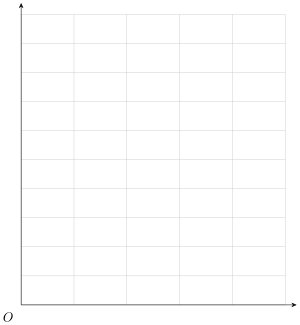
A sheet is ruled with 11 parallel lines in one direction and 6 parallel lines crossing them at right angles. A rectangle is formed by choosing two of the first set of lines and two of the second set. How many different rectangles can be formed?
Figure

Worked solution

A rectangle needs two of the 11 lines from the first family: (112)=55\binom{11}{2} = 55 ways, and two of the 6 lines from the second family: (62)=15\binom{6}{2} = 15 ways.

Each choice from the first family can be paired with each choice from the second, so multiply.

55×15=82555 \times 15 = 825

Answer

825825

Marking guidelines

Counts the pairs of lines from each family using combinations

1 mark

Multiplies the two counts

1 mark

Report a problem with this question.

Question 23 marksMedium

A string is made from the letter K repeated 17 times, the letter W repeated twice, and the letters R, S and T once each. Find the number of different arrangements of all these letters in which R comes before S and S comes before T, although other letters may lie between them.

Worked solution

There are 2222 letters, with K repeated 1717 times and W repeated twice, so without any order condition there are 22!17! 2!\dfrac{22!}{17!\,2!} arrangements.

R, S and T can be placed in 3!3! orders but only one order is allowed, so divide by 3!3!.

22!17! 2! 3!=263340\dfrac{22!}{17!\,2!\,3!} = 263340

Answer

263340263340

Marking guidelines

Counts the arrangements of all the letters allowing for the repeated letters

1 mark

Divides by the number of orderings of the three single letters because only one order is allowed

1 mark

Evaluates to the correct number

1 mark

Report a problem with this question.

Not affiliated with NESA.